Monday, June 25, 2007

Hemingway And Hadley


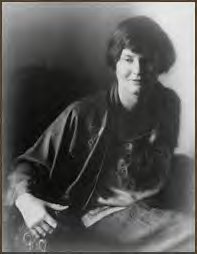
A Moveable Feast is not just about Hemingway learning to perfect his style of writing & living the Bohemian life - it is a love story about his first wife, Hadley.
He was married four times and had many affairs, but his "book of sketches" is saturated with sketches of Hadley and the things that they did together.
In this 1922 photo they are in Chamby, Switzerland, a favorite spot for them in the winter.
A photo of Hadley from an older post
  • HERE
  • Pin It

    Sunday, June 10, 2007

    KIKI


    A young American named Alice Ernestine Prin (October 2, 1901 – April 29, 1953), was an artists' model, nightclub singer, actress, and painter. She called herself Kiki, and that was how she was known to Hemingway and members of "The Lost Generation." She was also known as the Queen of Montparnasse, and Kiki de Montparnasse. Like Josephine Baker, she embodied the "Flapper" spirit of Paris in the Jazz Age of the 1920s. The top photo - by Man Ray - is called, "La Garconne," The Flapper.

    Hemingway wrote the introduction to her autobiography in 1929,(he had known her since 1921). Hemingway's introduction was also published separately as a pamphlet. The book was banned in the US until the 1970s. It is believed by some scholars that he copied her style in writing A Moveable Feast; some think it was just the idea of writing memoirs of Paris that he copied.
    The photos of Kiki are by Man Ray - a long time employer, companion and lover.
    Pin It

    Tuesday, June 05, 2007

    Paris Street Scenes


    Paris Street circa 1925
    Paris Street circa 1925

    Some typical Paris street views in Hemingway's time there, 1921 - 1926.
    Pin It

    Sunday, May 27, 2007

    Ernest At Home


    Ernest in front of the fire at the apartment above the sawmill, 113 rue Notre Dame des Champs. He is holding his son, Bumby, in the second shot. These photos are from 1924.
    Pin It

    Monday, May 14, 2007

    Josephine Baker


    Josephine Baker became the toast of Paris when she danced the Charelston with her jazz review, "Le Tumulte Noir." Parisians, and American expats loved the young American and her style of dance.

    The Art Deco poster is representative of the graphics of the era. It depicts the night life and cosmpolitan atmosphere of Paris in the 1920s. Art Deco took its name from the 1925 Exposition of Decorative Arts in Paris.
    Pin It

    Friday, April 20, 2007

    Some Of The Lost Generation


    The Lost Generation: Hemingway and the circle of ex-pat friends he later incorporated in The Sun Also Rises. Top photo includes, Harold Loeb, the model for Robert Cohn in The Sun Also Rises, on the left, and Hemingway in the center.
    In the bottom photo: Hemingway on the left, Harold Loeb, Lady Duff Twysden, Hadley, Don Stewart and Pat Guthrie.
    Writing the book, Hemingway thought of himself as the Jake Barnes character, Lady Duff Twysden was Brett, Pat Guthrie was Mike Cambell, and as mentioned, Harold Loeb was Robert Cohn.
    Pin It

    Sunday, April 08, 2007

    Hemingway At Shakespeare And Company


    The top photo shows Sylvia Beach with her long time lover and business partner, Adrienne Monnier inside Shakespeare and Company bookstore at 12 rue de l'Odeon.
    A photo of Sylvia Beach standing outside of her bookstore with Hemingway.
    She was one of Hemingway's staunchest friends and supporters. She lent him books, money, and encouragement.
  • More


  • Ernest inside Shakespeare And Company in 1921.
    Pin It

    Sunday, March 25, 2007

    Picasso And Gertrude Stein


    Pablo Picasso was one of Gertrude Stein's favorite artists and social contacts in Paris.
    Gertrude Stein is shown sitting in front of a portrait of her painted by Picasso. The photo was taken by Man Ray in 1922. More on Miss Stein and Hemingway can be found in an earler post


  • Pin It

    Sunday, March 04, 2007

    Jules Pascin


    Jules Pascin was a good friend of Hemingway. He was a working artist, Bulgarian by birth, and a regular of the Left Bank cafe circuit. Like Hemingway, he usually only went out to drink after getting in a good day's work. They frequently met at the Dome Cafe, a cafe Hemingway liked because many of the regulars were artists that had worked at their craft that day and were not just out to be "seen." In "A Moveable Feast," Hemingway devotes a short chapter to his friend, called: With Pascin at the Dome. Pascin who suffered from alcoholism and depression hanged himself when he was 45.
    The first painting is "Woman at Her Toilet."
    The second painting is of Pasin's mistress, Lucy Krohg.
    The next painting is titled "Nude Sleeping."
    After the photo of Pascin is a self-portrait by him done in 1921. Then, a portrait of him painted in 1906 by Albert Weisgerber.
    Pin It

    Thursday, February 22, 2007

    Robert McAlmon


    Robert McAlmon (on the right with Hemingway, first photo) was one of the wealthier American expats in Paris. He married into his wealth. He was a poet and writer who wanted to start a publishing house for new writers. He started Contact Editions and used Shakespeare & Co. as his office.
    He met Hemingway and the two became friends even though the relationship had its stormy times.
    They travelled to Spain with Bill Bird for Ernest's first exposure to bullfighting - in the photo above they are in the Spanish town of Ronda in the bullring there.
    The third photo shows Hemingway's first published work - published by McAlmon in 1923.
    The short stories were: My Old Man, Out of Season, and Up in Michigan.
    The ten poems were:
    Mitraigliatrice
    Oklahoma
    Oily Weather
    Roosevelt
    Captives
    Champs d'Honneur
    Riparto d'Assalto
    Montparnasse
    Along With Youth
    Chapter Heading
    Pin It

    Saturday, January 06, 2007

    Ernest In Switzerland


    Ernest and Hadley liked to get out of the damp cold of Paris in the winter for the clean air of alpine Switzerland and Austria.
    They'd rent a cabin or find a hotel to use as a base camp to ski and hike from.
    Ernest always ended up with skin browned by the high altitude sun.
    These photos were taken in Gstaad, Switzerland in 1927.
    Pin It

    Wednesday, December 27, 2006

    The Banks Of The Seine


    The Pont-Neuf, Paris by Edouard Boubat
    The Pont-Neuf, Paris


    The Pont-Neuf, one of Hemingway's regular walking routes as he explored the Seine and its inhabitants. He loved the Notre Dame area, it was close to the booksellers and then he might sit on the grass and eat his lunch as he watched the fishermen.
    Pin It

    Sunday, November 26, 2006

    Hemingway The Young Journalist


    Ernest's passport from late 1921. He was going to Paris with Hadley and the passport was provided by the Toronto Star newspaper. He was going to be their foreign correspondent in Paris.
    Ernest had been a writer for the Kansas City Star newspaper for seven months in 1917. Learning to write "newspaper style" seemed to be to his liking. He adhered to the Kansas City Star's style guide which begins: "Use short sentences. Use short first paragraphs. Use vigorous English. Be positive, not negative." This style of writing was also called "cablese" by journalists because of the sparse style that sending telegrams required. Telegrams were expensive and journalists cut down their transmissions to the bare essentials. He carried these lessons over to the Toronto Star.
    (Telegrams were called "cables" because they were transmitted on wires - usually running between railroad stations. Almost any town of any importance had a railroad station. If there was a fire in Boston, for example, the story would be sent from there to telegraph receivers up and down the rail line. The story was said to have "moved on the wire." The first reporter to telegraph the story is said to have "broke" the story and "scooped" the competition. Cables could also be sent by radio -"wireless", as the British called radio - anyone who has seen a movie about the Titanic is familiar with radio telegrams. Radios and the necessary large antennas were not very practical or common in the 1920s.)
    It was in his newspaper work for the Toronto Star that Hemingway developed not only his stylistic quirks (his famous terse, staccato style of writing), but also his hard-boiled dialogue, his comedic structure, major themes and sense of plot and character.
    When he arrived in Europe he was slow in beginning his work for the Star. It took him two months to mail in his first articles. That soon became about two a week. He wrote about Swiss tourism, German inflation, tuna fishing at Vigo, the election of Pope Pius XI, Clemenceau's place in French history, a book review ( his first) of a novel set in Africa; about thirty articles from february untill the end of March, 1922.
    Pin It

    Saturday, November 18, 2006

    First Novel Published


    Fired with the fictional possibilities that he saw during his visit to the Pamplona bullfights in 1925, Hemingway started translating them into a novel, initially titled, Fiesta, soon after leaving the Spanish town. Within roughly two months, the first draft of what would eventually be titled The Sun Also Rises was done. Although this work is a classic today, one reviewer charged, at its publication in 1926, that Hemingway was hiding his talents "under a bushel of sensationalism and triviality." Many others, however, disagreed. One critic claimed that its "lean, hard narrative prose" put a good deal of "literary English to shame," and yet another noted that the novel contained the best dialogue to be found in contemporary fiction.
    The celebrity that the novel brought him marked the beginning of the end of the early innocence of the Paris years.
    Pin It